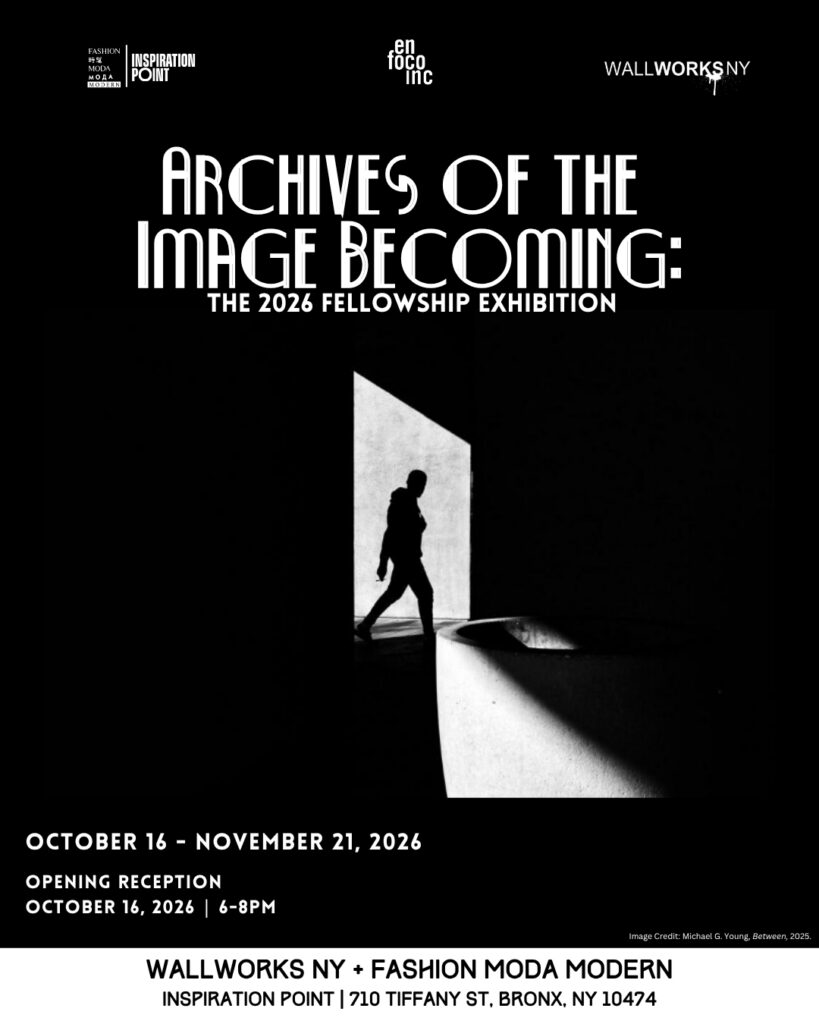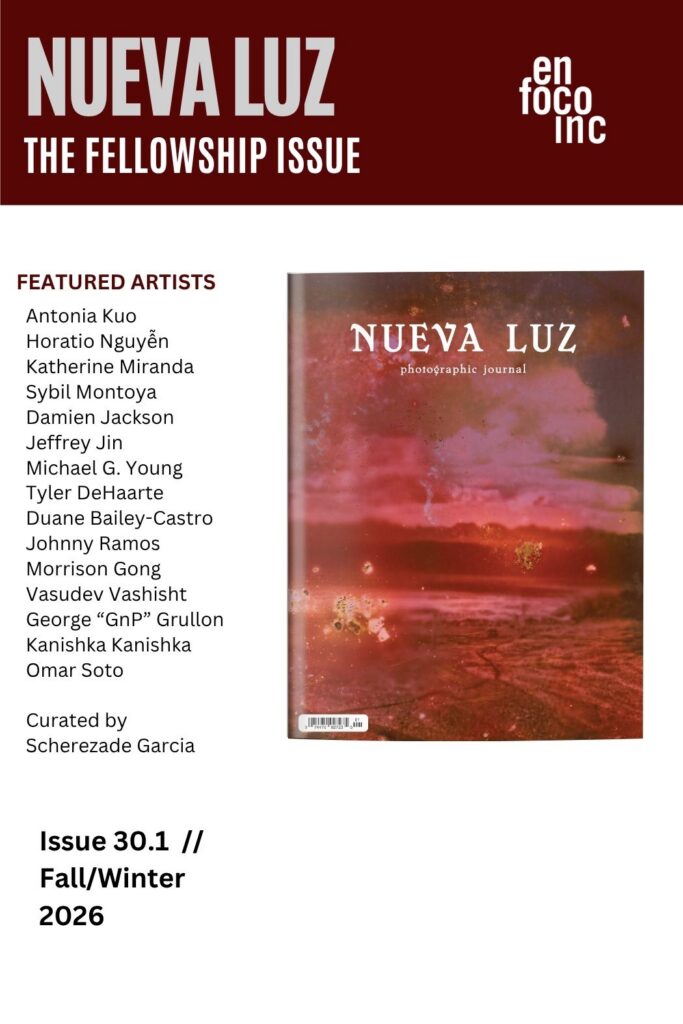
The 2026 En Foco Fellowship cohort presents a diverse and expansive field of contemporary photographic practices—collectively interrogating how images produce knowledge, memory, identity, and belonging. Photography, printmaking, drawing, painting, collage, archival processes, and experimental image-making are employed, challenging the presumed stability of the photographic image. The discipline of photography becomes less of a transparent window into the world and more of a participatory dialogue, a fluid space where histories are reimagined, identities are performed, and forms of belonging are continuously evolving.
Across the cohort, the photographic image functions as both archive and proposition. It records, but it also speculates. It preserves traces and mark-making while acknowledging the instability of memory. Family archives’ inherited cultural forms, migration histories, urban environments, ritual practices, and embodied experiences become materials for both revisiting and reconfiguring the past. The ways in which the artists engage with personal and communal histories ensure an essential sense of nuance and fluidity, where imbalance and incomplete frames are embraced. The sentiment—combined with creative methodology—rejects the idea of narrative needing to be or feel fixed and stagnant, and welcomes the layered, incomplete, and often contested terrains through which some of the most compelling landscapes become memorialized.
The city occupies a particularly significant position within this field of inquiry. Urban space appears as an archive of movement and encounter, shaped by migration, labor, cultural exchange, social histories, and the everyday rituals of its inhabitants. Streets, neighborhoods, architectural structures, bridges, and overlooked urban pockets become sites where individual and collective memories accumulate. The city is understood not simply as a backdrop but as an active participant in the construction of identity. Its surfaces contain histories; its infrastructure both separates and connects; its communities form networks of belonging within larger systems of displacement and transformation.
Several practices approach the urban environment through atmosphere, light, and temporality—changing colors of the seasons, the movement of shadows, and the shifting relationship between natural and constructed environments become formal and conceptual subjects. In this sense, photography operates as a mode of sustained looking. The camera registers life in a holistic sense, capturing the present but also the passage of time. The photographic image becomes a record of transformation: of the city, of nature, and the ability to perceive both as separate entities and in unison.
The relationship between the organic and the built environment is central to many of the works. Nature appears not as an idealized alternative to the city but as a persistent and often unruly presence within it. Plants emerge through concrete. Soil, gardens, compost, and growth become metaphors for processes of regeneration, decomposition, and care. These practices challenge the separation between technology and ecology, proposing instead that image-making can be understood through cultivation processes. The darkroom, the garden, the body, the streets, and the studio become spaces of transformation in which time, labor, material, and attention produce unexpected forms of life.
This concern with cultivation extends to questions of care and self-sustenance. The artists examine the conditions in which individuals and communities survive and create spaces of refuge. An oasis within an urban environment becomes both a physical and conceptual possibility: a space of nourishment, resistance, and imaginative freedom. The organic image, with its emphasis on mutability, texture, and layered surfaces, becomes a way of thinking about bodies and environments as interconnected systems.
The question of belonging is equally central to the cohort. Within these practices movement across geographic and cultural borders is not understood solely as displacement, but as forces that can generate new forms of knowledge, hybridity, and connection—allowing travel, adaptation, and migration to become methods of seeing.
Within this framework, cultural symbols and rituals function as systems of belonging: flags, costumes, ceremonies, gestures, and inherited traditions communicate affiliations that are both intimate and political. They reveal the ways communities construct continuity across time and geography, yet these forms of belonging are complex and at times even contradictory. Community can provide protection and solidarity while also imposing expectations and structures of exclusion. The artists examine these tensions between affiliation and isolation, collective identity and individual experience, to form understandings of personal reinvention.
The body emerges as a crucial site where these tensions materialize, carrying histories of gender, sexuality, ancestry, violence, desire, and survival. In this way, the artists investigate how identity is formed through the interaction between individual experience and larger social structures.
Emphasizing the ancient in relation to contemporary, feminist, and matriarchal perspectives, ritual is not treated as a static inheritance but as a living and mutable form. It can be reinterpreted, reclaimed, and reimagined. Through the body, ritual becomes a way to negotiate histories of power, death, resilience, and survival. The act of repetition can preserve tradition, but it can also produce new meanings.
Questions of survival also inform the cohort’s engagement with precariousness. Several practices embrace visual languages that emerge from conditions of instability, isolation, loss, marginalization, and catastrophe. Yet these conditions are not translated into an aesthetic of victimhood. Instead, they generate strategies of invention: the theatrical, the excessive, the baroque, and improvisation become methods for asserting presence. A precarious aesthetic can reveal how individuals and communities create meaning from limited resources, fractured histories, and unstable circumstances.
The importance of invention is reflected in and through the expanded materiality of the work, brought into conversation with drawing, painting, printmaking, transfer processes, collage, and cinematic structures. Images are layered, fragmented, enlarged, reconfigured, and recontextualized. Process is not secondary to the final work; it is itself a form of inquiry.
Such practices also complicate the distinction between image and object. A photograph—as its own object—holds the ability to become a surface, a fragment, a trace, or a component within a larger installation. What is remembered is never simply retrieved but reconstructed. The camera can reproduce inherited images and stereotypes, but it can also interrupt them. Histories of Black communities, Indigenous traditions, migrant movements, cultural rituals, and marginalized forms of social life are approached through acts of observation that seek to complicate rather than simplify. Familiar visual narratives are revisited and reimagined, highlighting the distance between representation and lived experience.
The act of witnessing becomes central—these artists observe the world while acknowledging that observation is always situated. The camera is not an impartial instrument and, thinking abstractly, acts as a participant within encounters between maker, subject, history, and viewer, with the resulting images often occupying a space between documentation and interpretation. They ask not only what is being seen but whom is looking, from where, and under what conditions.
At the same time, the cohort demonstrates photography’s capacity to produce intimacy: a face can become a landscape and a landscape can become a portrait. A shadow can disclose an image within an image. Through careful attention to light, framing, gesture, and atmosphere, the artists locate the extraordinary within the ordinary—fearlessly owning complexity.
The practices represented by the En Foco 2026 Fellows do not constitute a singular aesthetic or thematic position. Their diversity is essential to the issue and exhibition’s significance. What connects them is not a common visual language but a shared investment in the capacity of images to generate relationships between individual and community, body and history, city and nature, memory and invention, displacement and belonging.
The works propose photography as a field of continual transformation. While images become archives, they also become speculative spaces. They preserve what is threatened with disappearance while making room for what has not yet been imagined. Through their varied approaches to history, migration, ritual, ecology, embodiment, community, and survival, these artists demonstrate that photography remains a profoundly generative medium—one capable of both witnessing and remaking the world.
Engaging this constellation of practices, the photograph is never simply an image of a place, a person, or an event. Histories meet, memory is reconstructed, identities are negotiated, drawing visibility to how belonging is conceived.
 Duane Bailey-Castro is a lifelong Bronx resident who specializes in urban landscape and travel photography. He loves to go abroad photographing places that exist on the periphery where beauty, history, and memory intersect. In 2025, he photographed the abandoned, ghostly German mining town of Kolmanskop in Namibia, which is decaying and slowly being engulfed by the surrounding Namib Desert. These photographs document a place where, over a century ago, colonial greed and lust for power left a legacy of exploitation and genocide that the people of Namibia and Germany continue to wrestle with today. His images ask viewers to reflect on the eerie beauty of Kolmanskop where the desert landscape has preserved the difficult, heartbreaking memories of the past, and to consider what lessons Kolmanskop might offer the conflicted world seen today.
At the same time, his ongoing long-term project focuses on the fifteen bridges that span New York City’s Harlem River. His project examines these unsung spans as symbols of the Bronx and Upper Manhattan that connect the adjacent urban landscape as well as the people—predominantly Black and Latino—that call this area of New York City home. His photographs bring attention to and celebrate parts of the city landscape and communities that have a long history of being overlooked and under-resourced. The motivation and intent of this photographic project is born from a journey of healing and self-reflection and his personal search for identity and pride in the borough that is home.
Bailey-Castro’s work has been exhibited in his home borough at the Bronx Children’s Museum, Bronx Documentary Center, Bronx Historical Society, Longwood Art Gallery, Montefiore Medical Center, and New York Public Library’s Morris Park Library. He is the recipient of a 2020 Bronx Recognizes Its Own (BRIO) Award and 2019 Community Arts Grant, both from the Bronx Council on the Arts.
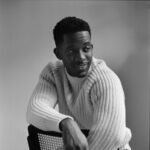 Tyler DeHaarte is a Brooklyn-based Black photographer and visual artist whose work explores the space between memory, history, and lived experience. His practice resides in the tension between what’s been documented and what’s been erased. Working primarily in photography, he creates layered narratives that center Black life with intimacy, nuance, and care. Rooted in collaboration and ongoing dialogue within the Black community, DeHaarte builds images through trust-based relationships with people who share lived experiences similar to his own. He received his BFA in photography from Parsons School of Design (New York, New York) and was a 2021 finalist for The Hopper Prize. Grounded in long-term engagement, his practice blends research, lived testimony, and environmental observation to expand the visual archive of Black life in America. His work contributes to contemporary efforts to reframe Black presence within American visual culture.
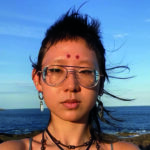 Morrison Gong works across photography, writing, performance, and moving images. They invoke the body as a site of haunting, wounding, conjuring, and mythmaking. Communing with insects, aquatic creatures, relics, ceremonial objects, Gong fuses their practice with erotic, animistic, and funerary rites. Their video works have been shown at Anthology Film Archives (New York, New York), Microscope Gallery (New York, New York), Vox Populi Gallery (Philadelphia, Pennsylvania), CROSSROADS presented by San Francisco Cinematheque, Hong Kong Arthouse Film Festival, among others. Their photography has been featured on It’s Nice That, Whitehot Magazine, and Lomography Magazine. They have taught photography and interdisciplinary practice at the International Center of Photography (New York, New York) and The School of Making Thinking (New York, New York). Gong received a BFA from Parsons School of Design and an MA from The New School for Social Research, both in New York, New York. They are based in Queens, New York.
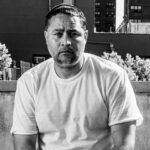 George “GnP” Grullon (b. Brooklyn, New York, 1981) is a Puerto Rican and Dominican photojournalist based in East Harlem, New York City. His work is rooted in the belief that everyday lives deserve careful, lasting documentation. After studying arts and music technology at Queensborough Community College (Queens, New York), he turned to photography while reflecting on the absence of images from his own childhood—an absence that revealed how easily working-class stories disappear.
Grullon approaches photography as both record and reclamation. Whether documenting urban running culture, street basketball tournaments, or neighborhood rituals, he works closely with his subjects, honoring the dignity, rhythm, and pride within often overlooked communities. His images function as living archives—intimate, unguarded, and grounded in place—preserving the beauty and complexity of the streets that shaped him.
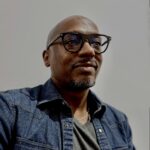 Damien Jackson is a photographer whose work sits at the intersection of documentary practice, family history, and Caribbean diasporic memory. Born in Gibraltar and raised between Saint Vincent and Brooklyn, New York, he photographs Black life with an ethic of dignity and emotional precision, building images that function as both record and offering. His practice is rooted in everyday ritual—the gestures, rooms, and gatherings where lineage is carried forward—and in the belief that photographs can be portals between what is visible and what is felt. Working primarily in black and white, Jackson focuses on intimacy, gesture, and atmosphere, often returning to themes of elders, inheritance, and communal care. His work explores how families hold one another through joy, migration, and loss, and how place shapes identity across generations.
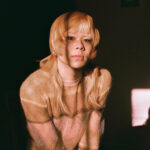 Jeffrey Jin (b. 2003) is a queer, Chinese American photographer born and raised in the suburbs of Houston, Texas, within the confines of a pious Chinese church community. Since taking their first “Are You Gay?” quiz at age twelve, religious faith has been supplanted with a devout interest in both analog and digital photography as tools to strengthen identity and preserve what’s most familiar: Their family and queer friends of color. In doing so, their work unveils narratives surrounding upbringing, corporeality, and a deep affection for the physical and virtual landscapes they inhabit—from Texas’ winding roads to the Internet’s deep caverns.
Their images have been featured in publications including Dazed, FAR NEAR, and NOWNESS ASIA, and have been exhibited across Houston; New York City; and Shanghai, China. They are an alumnus of the Eddie Adams Workshop (Jefferson, New York), a member of Diversify Photo, and hold a degree in Asian American studies and sociology from the University of Texas at Austin (Austin, Texas).
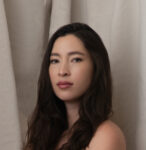 Antonia Kuo (b. New York, New York, 1987) lives and works in New York, New York. She received an MFA from Yale University (New Haven, Connecticut), her BFA from School of the Museum of Fine Arts and Tufts University (Boston, Massachusetts), and a one-year certificate from School of the International Center of Photography (New York, New York). Her work has been exhibited at Chapter NY (New York, New York), James Cohan (New York, New York), Whitney Museum of American Art (New York, New York), Centre Pompidou (Paris, France), Project Native Informant (London, United Kingdom), Adams and Ollman (Portland, Oregon), Frye Art Museum (Seattle, Washington), Each Modern (Taipei, Taiwan), and Metropolitan Museum of Manila (Taguig, Philippines), among others. Kuo has been an artist-in-residence at MASS MoCA (North Adams, Massachusetts), Vermont Studio Center (Johnson, Vermont), Banff Centre for Arts and Creativity (Banff, Canada), and was a MacDowell Colony Fellow (Peterborough, New Hampshire). Her work is included in the collections of the Whitney Museum of American Art, Centre Pompidou, Frye Art Museum, and Museum of Modern and Contemporary Art in Nusantara (Jakarta, Indonesia).
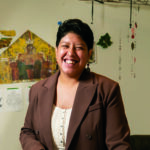 Katherine Miranda (they/he) is a Latinx, non-binary multidisciplinary artist and educator born, raised, and based in the Bronx. By transforming objects and photographs collected from their family, community, and nature, Miranda creates a mythological archive that honors their familial, communal, and ancestral histories. Their belief that our histories hold the key to reimagining our futures acts as a constant guide in their practice, often encouraging others to explore their own legacies. Miranda has been a recipient of the Van Lier Fellowship at Wave Hill (Bronx, New York) in 2021, the AIM Fellowship at The Bronx Museum of the Arts (Bronx, New York) in 2022, and the Create Change Fellowship at The Laundromat Project (Brooklyn, New York) in 2023, among others. Throughout these experiences, they constantly endeavor to learn, document, and preserve their family’s stories—reimagining them into alternative worlds.
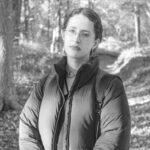 Sibyl Montoya (b. 1993, Bronx, New York) is a transsexual Guatemalan American photographer and sound artist residing in Brooklyn, New York. Her work explores memory, trauma, bodies, and the built environment. She holds a BA in cultural anthropology from Hunter College, CUNY (New York, New York). Her work has been exhibited at Public Space One (Iowa City, Iowa), Foley Gallery (New York, New York), BBA Circle Gallery (Berlin, Germany), and Blank Wall Gallery (Athens, Greece); and her images have been published by Valentine Editions, Spew VIII, and IMA Next. She currently works as a freelance fashion photographer, collaborating with emerging boutique brands Euphorbia, PRU, D Second, and C’H’C’M, as well as globally-known labels Arc’teryx and Engineered Garments.
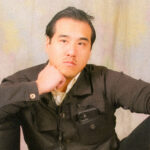 Horatio Nguyễn is a New York-based filmmaker and photographer whose work spans documentary, narrative, and commercial projects. His practice blends fiction and nonfiction storytelling techniques, resulting in hybrid works that fuse the staged and the authentic, while speaking to nuanced, lyrical truths. He is a first-generation Vietnamese American born in Pascagoula, Mississippi. His work examines immigrant communities, cultural inheritance, memory, ritual, and identity across generations.
Nguyễn received mentorship from Werner Herzog (b. Munich, Germany, 1942), Alec Soth (b. Minneapolis, Minnesota, 1969), and Chien-Chi Chang (b. Taichung, Taiwan, 1961). He is the recipient of a NYSCA/NYFA Artist Fellowship and artist residency at CPW: Woodstock AIR (Woodstock, New York), both in 2026. His work was selected for The New York Times’ New York Portfolio Review and was featured in the 2025 New Orleans Photo Alliance (NOPA) annual exhibition at the Ogden Museum of Southern Art (New Orleans, Louisiana). His images have also appeared in The New York Times, The Wall Street Journal, Bloomberg Businessweek, PBS, and as a Vimeo Staff Pick. Nguyễn’s first solo exhibition, Dạ, Đúng Rồi, was held at Antenna:3718 in New Orleans in 2025.
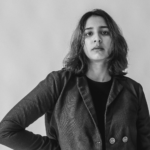 Kanishka Puri is a New York City-based Indian visual artist who explores interspecies collaboration and ecological entanglement as ways to reimagine archives, kinship, and knowledge. She received her MFA in photography from Parsons School of Design (New York, New York) in 2025. Her works have been exhibited at Woman Made Gallery (Chicago, Illinois), Vinzenz Wien (Vienna, Austria), Anna-Maria and Stephen Kellen Gallery (New York, New York), BAXTER ST at CCNY (New York, New York), Photoville (Brooklyn, New York), Lishui Photography Festival (Lishui, China), Elizabeth Street Garden (New York, New York), and Jaipur Art Week (Jaipur, India). Her photography and writings have been published in Back Matter, Rukhmabai Initiatives, and Columbia Journal. Kanishka has shared her research through artist talks at Tyler School of Art and Architecture (Philadelphia, Pennsylvania), the Saas-Fee Summer Institute of Art (Paris, France), and Society for Photographic Education’s 2026 annual conference (Atlanta, Georgia).
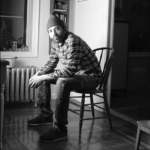 Johnny Ramos is a filmmaker and photographer whose documentary practice explores identity, migration, and cultural memory within Puerto Rican and diasporic communities. Working across portraiture and documentary film, his work focuses on everyday life as a site of resilience, history, and cultural continuity. Ramos creates visual narratives that challenge reductive representations of Puerto Rican life on the island and diaspora and highlights dignity and vitality.
Ramos holds a BFA in film production from Wright State University (Dayton, Ohio) and has produced several short documentary films centered on lived experience and community storytelling. As a teaching artist in New York City, he works with young filmmakers ranging from thirteen to twenty-four, mentoring them in film production and developing their voices through media.
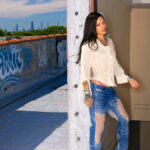 Omar Soto is a DACAmented photographer who creates surreal imagery that explores queer joy and escapism to navigate the marginalization they endure while living at the intersection of race, gender, and social class. Born in Tijuana, Mexico, in 1996, Soto migrated to the United States in 2000. With a passion for the arts, they studied at South Mountain High School (Phoenix, Arizona) under the institution’s magnet photography program, learning fundamental photography skills while enriching their artistic practice. Soto has been the recipient of the Sally and Richard Lehmann Emerging Artist Awards from the Phoenix Art Museum (Phoenix, Arizona), Celebración Artística de las Américas (CALA) Alliance residency (Phoenix, Arizona), and the American Photographic Artists (AMA) LGBTQIAP+ Photography Grant (Washington, D.C.).
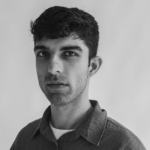 Vasudev Vashisht is a visual artist of Indian origin based in New York. Vashisht’s work has been exhibited at CreateCOP29, Photoville (Brooklyn, New York), the New York Foundation for the Arts (NYFA) Immigrant Artist Mentoring Program exhibition at New York Live Arts (New York, New York), BAXTER ST at CCNY (New York, New York), Jaipur Art Week (Jaipur, India), and Lishui Photography Festival (Lishui, China). Recent publications include The Columbia Journal and D la Repubblica. He has facilitated workshops with communities across the Peruvian Andes and on Governors Island in New York City, and has shared his research through talks at MASS MoCA (North Adams, Massachusetts), Society for Photographic Education’s annual conferences, and Urban Soil Institute (New York, New York), among other venues. Vashisht holds an MFA in photography from Parsons School of Design (New York, New York). When not covered in soil or darkroom chemicals, he is trying to convince airport security that the soil-filled bags in his luggage are “art supplies.”
Michael G. Young is a street and documentary photographer born and raised in Brooklyn, New York, now residing in the Bronx, with a keen eye for light and shadow. His passion translates into striking imagery that captures the essence of his surroundings.
Young’s work transcends the frame, finding recognition in such esteemed publications as The New York Times, ZEKE Magazine, Black & White Magazine, and the third edition of Jill Jonnes’s South Bronx Rising (2022). He has exhibited his work at such venues as Corcoran School of the Arts & Design (Washington, D.C.), Wilmer Jennings Gallery at Kenkeleba (New York, New York), The Bronx Documentary Center (Bronx, New York), The Bronx Museum of the Arts (Bronx, New York), and Photoville (Brooklyn, New York), further solidifying his artistic presence.
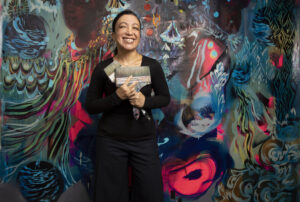 Scherezade García is a painter, printmaker, and installation artist whose work explores migration, history, cultural colonization, and collective memory. She is a co-founder of the Dominican York Proyecto GRÁFICA and holds degrees from Altos de Chavón, Parsons | The New School (BFA), and The City College of New York (MFA).
Her work has been exhibited solo and duo exhibitions at the Art Museum of the Americas, Columbia University, Lehman College Art Gallery, and Museo de Arte de Santo Domingo, among others. She has participated in major biennials including Havana, Caribbean, San Juan’s Poli/Gráfica, and the BRIC Biennial.
García’s work is in the collections of The Met, LACMA, El Museo del Barrio, the Smithsonian American Art Museum, the Nasher Museum, the Blanton, The Hood Museum and others. She received the Joan Mitchell Foundation Painters & Sculptors Grant (2015) and the Colene Brown Art Prize (2020). Her monographs include From This Side of the Atlantic (2020) and When the Sea is My Land (2024).
She is represented by Praxis Art Gallery (NY) and ASR Galería (DR), she is an Associate Professor at UT Austin and lives between Brooklyn and Austin.
|